Fire insurance in Nigeria: fire and special perils explained
Fire and special perils covers homes, shops and business stock against fire, lightning, explosion, riot, storm and flood. What it covers, what it excludes and how to avoid the average clause.
Fire insurance in Nigeria is usually written as fire and special perils: it pays for damage to a building, its contents or business stock caused by fire, lightning, explosion and a named list of other events such as riot, storm and flood. It does not cover theft, and it only pays in full when you insure for full value.
Key takeaways
- Fire and special perils covers named events only: if a cause is not on the list, it is not covered.
- It suits homes, shops, offices and warehouses, covering the building, contents, machinery and stock.
- Insure for full value. Under the average clause, a 25% shortfall cuts every claim by 25%.
- For illustration, at 0.65% a year, ₦20,000,000 of shop property costs ₦130,000 to insure.
- Lost income after a fire needs business interruption cover, which is not available through VaultCova today.
What does fire and special perils insurance cover?
A named-perils policy pays only for the events listed on it. Fire and special perils covers fire, lightning and explosion, plus the special perils shown on your schedule:
- riot, strike and malicious damage
- storm and flood
- burst pipes
- impact by vehicles or aircraft
- bush fire
- earthquake
These match real local risks: market fires that spread from stall to stall, generator and fuel fires, electrical fires after power surges, flooding in the rainy season and damage during unrest. The cover pays for damage to the property itself, measured on the basis your schedule shows.
Who is fire insurance for?
Homes. For a house or flat, fire is usually bought as part of a Householder's policy, which covers fire, burglary and special perils together for the building and contents. Our house insurance page explains it.
Shops and offices. Fire and special perils can cover the building if you own it, plus shop fittings, furniture, equipment and stock. Tenants insure what they own inside, while the landlord insures the structure. Our guide to insuring a small shop for fire, theft and stock shows how this fits with burglary cover.
Stock and business property. Stock rises and falls through the year, which makes the sum insured harder to get right. Our article on insuring business stock and inventory covers how to value it. Larger sites with plant and machinery can also look at Industrial All Risks, which VaultCova can arrange.
What does fire insurance not cover?
The usual exclusions are:
- theft, unless it follows a covered fire
- wear and tear and gradual deterioration
- property damaged by its own fermentation or heating process
- consequential loss, such as lost profit, unless added
- war and nuclear risks
That fourth point matters for any business. If a fire shuts your shop for three months, a fire policy pays to repair the building and replace stock, but not the income you lose while closed. That needs business interruption insurance, which is not available through VaultCova today. If you want it, tell Cova so we know there is demand.
How much should you insure for, and how does the average clause work?
The sum insured is the most the policy will pay. The average clause says that if you insure property for less than its full value, every claim is reduced by the same proportion. Our guide to the average clause goes deeper, but this example shows the effect.
A trader's stock and fittings are worth ₦20,000,000. To save money, she insures them for ₦15,000,000. For illustration, at a rate of 0.65% a year:
- full value premium: ₦20,000,000 x 0.65% = ₦130,000
- underinsured premium: ₦15,000,000 x 0.65% = ₦97,500
- saving: ₦32,500
A fire then causes ₦8,000,000 of damage. Because she insured three quarters of the value, she receives three quarters of the loss:
- ₦15,000,000 / ₦20,000,000 = 0.75
- ₦8,000,000 x 0.75 = ₦6,000,000, before the excess
The ₦32,500 saving cost her ₦2,000,000 on one claim. Cova quotes your exact figure before you pay.
Values drift upwards as the naira weakens and building materials cost more, so review your sums insured at least every year.
Reinstatement or indemnity: which value is paid?
Property can be insured on one of two bases, and your schedule should say which:
- Reinstatement pays the cost of rebuilding or replacing with new property of the same kind, with no deduction for age.
- Indemnity pays what the property was worth just before the loss, so the replacement cost less an allowance for wear, tear and age.
On an indemnity basis, a ten-year-old roof is not paid as a brand new one. For buildings, the sum insured should be the full cost of rebuilding, including clearing the site and professional fees, not the market price of the property. Whichever basis applies, the sum insured must match it, or average applies.
What conditions apply, and how do you claim?
Fire precautions are usually conditions of cover, not suggestions. Typical ones:
- keep fire extinguishers serviced and where they can be reached
- keep wiring in good order and avoid overloaded sockets
- store fuel and run generators away from the building and stock
- keep exits clear
- declare any change in how the building is used, such as turning a store into a workshop
If an underwriter's surveyor recommends a measure, VaultCova shows it under Surveyor recommendations in Insight so you can mark it done and avoid a claim being reduced for it.
To claim, notify the underwriter at once, take reasonable steps to stop further damage, keep damaged items for inspection, and provide the claim form, photos, a fire service report where they were called, and proof of value. Receipts and photos stored in VaultLog survive a fire that destroys your paper records.
Remember that the loss must happen, and be claimed, within the current policy period.
Frequently asked questions
Does fire insurance cover flood damage?
Yes, where storm and flood is one of the special perils on your schedule. Check that it is listed, especially if your area floods in the rainy season.
Does fire insurance cover a fire caused by a generator or power surge?
A fire started by a generator or an electrical fault is usually covered as fire. Damage to electrical equipment from a surge without a fire is not, and needs electronic equipment all risks cover.
Is theft during or after a fire covered?
Usually yes, if the theft follows a covered fire, as theft is excluded from fire cover only when it happens on its own. For theft at any other time, you need burglary cover.
Can a tenant buy fire insurance?
Yes, for the contents, fittings and stock they own. The building itself is normally the landlord's to insure.
Does fire insurance pay my rent or wages while I rebuild?
No. That is business interruption cover, which is not available through VaultCova today. Tell Cova if you want it.
How much does fire insurance cost?
It depends on the value, the building and what it is used for. For illustration, at 0.65% a year, ₦10,000,000 of property costs ₦65,000, and Cova quotes your exact figure before you pay.
Log your property and stock in a free vault and ask Cova for a fire quote at full value.
Cover it in minutes, not days
Log what you own, get the cover that fits you from licensed underwriters, and pay in the app.
Get fire coverRead next
All resources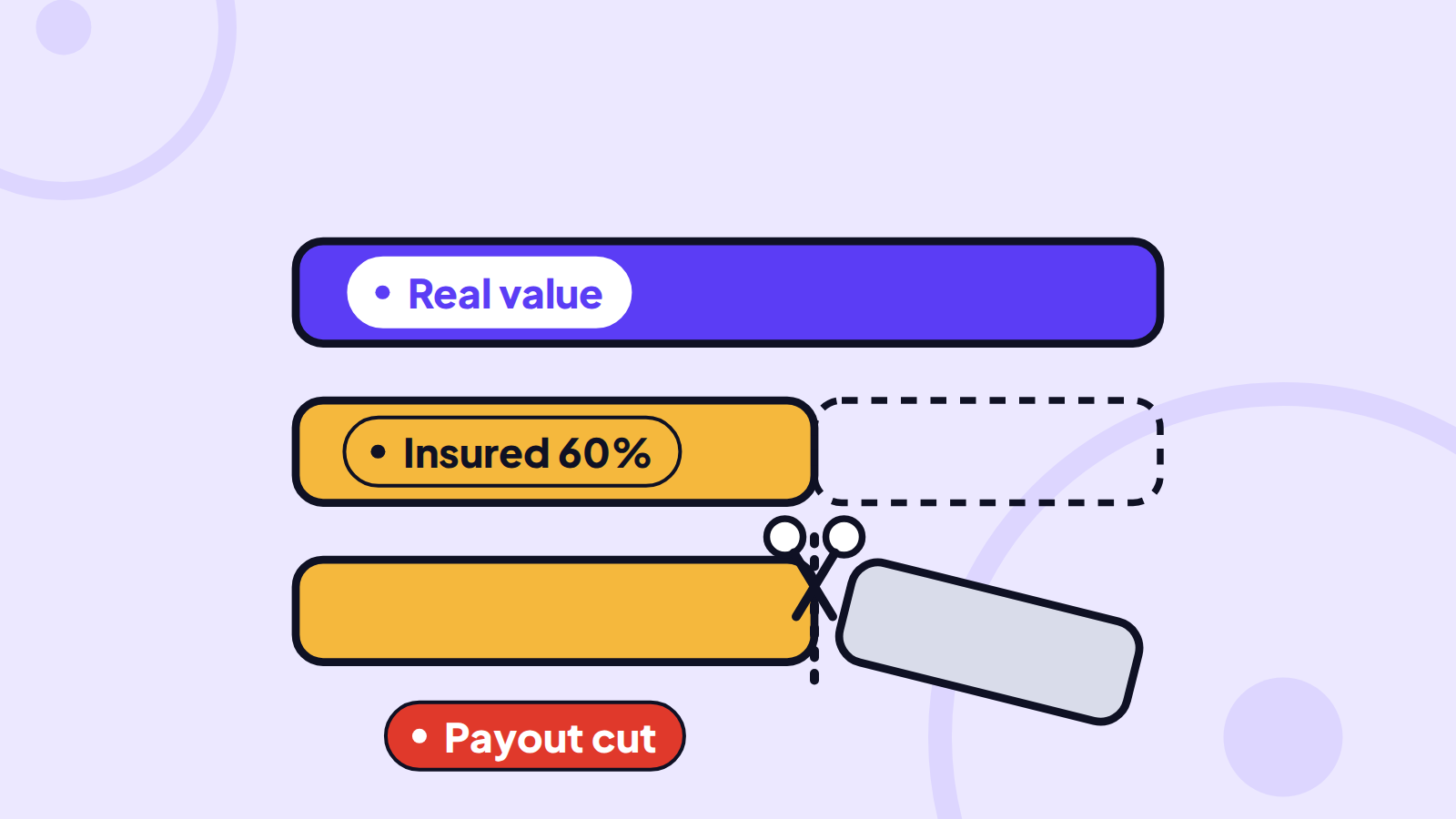
The Average Clause Explained: Why Underinsurance Cuts Your Payout
If you insure your property for less than its real replacement value, the average clause can reduce your claim payout by the same percentage you are underinsured. Here is how it works and how to avoid it.
Insuring a Small Shop in Nigeria: Fire, Theft and Stock in One Policy
A small shop faces fire, break-ins, power surges and flooding every season. Here is how to combine stock, fittings, equipment and cash into one sensible policy, and how to avoid being underinsured.
How to Insure Your Business Stock and Inventory in Nigeria
A practical guide for shop owners, traders and small manufacturers on insuring stock and inventory against fire, theft and flood, and getting a fair payout when it matters.