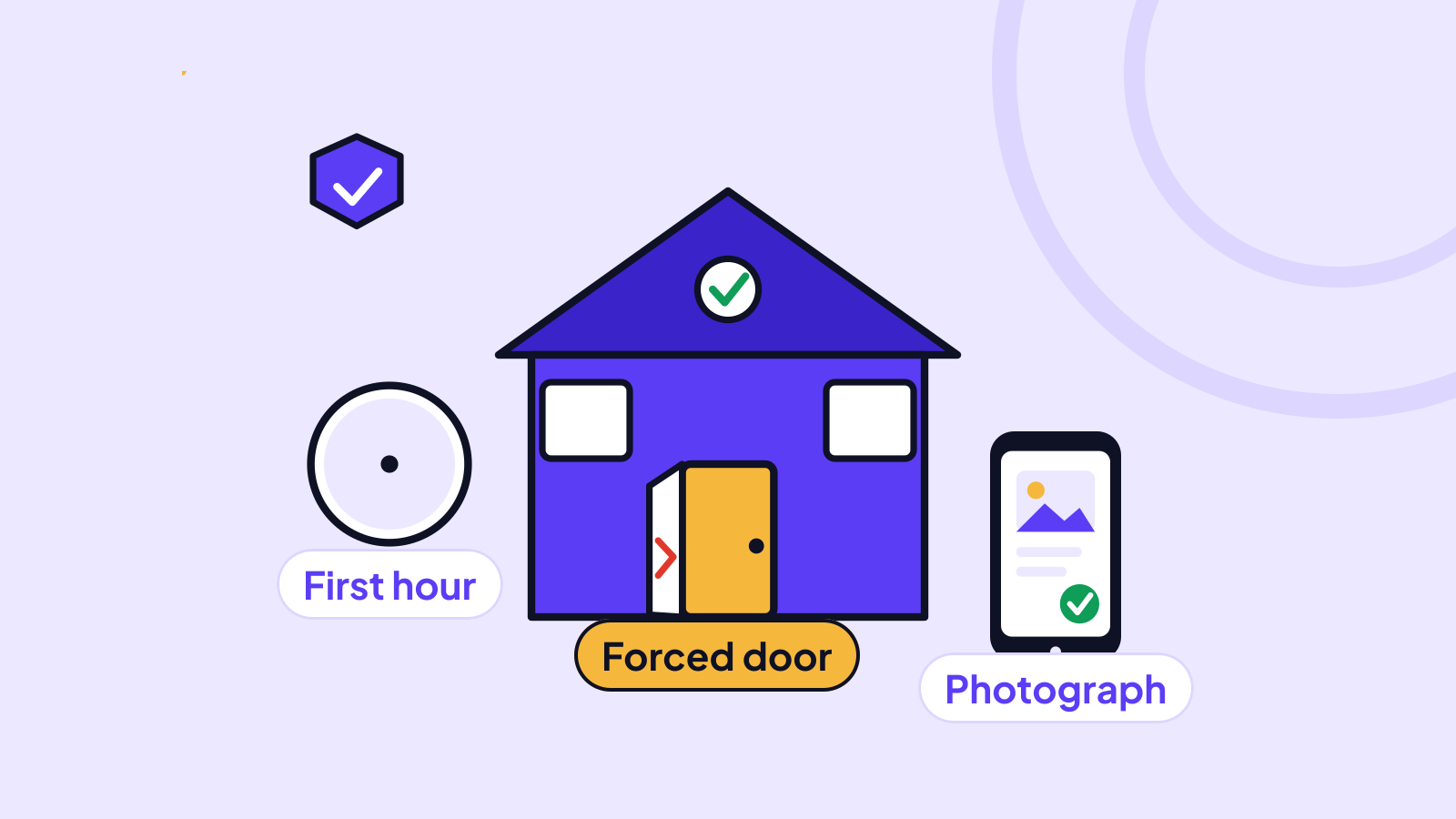
Does Insurance Cover Theft? Which Policies Pay and When
Burglary, householder's, all risks and comprehensive motor all cover theft, each on different terms. Here is what pays, what never does, and how the average clause affects a claim.
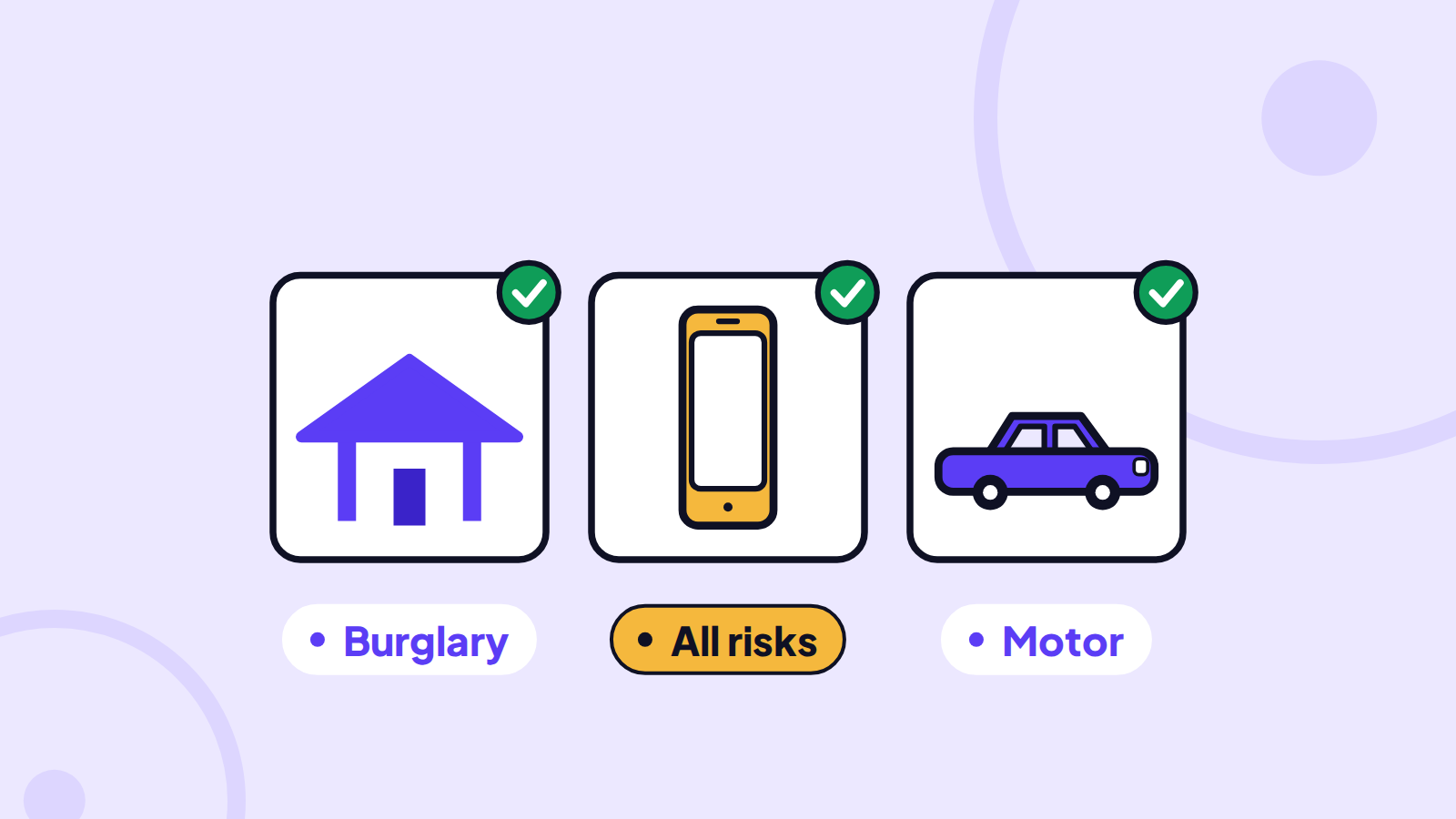
Yes, insurance covers theft, but only under the right policy and on its terms. Burglary and householder's cover pay when thieves force their way into your premises, all risks pays for portable items stolen elsewhere, and comprehensive motor pays if your car is stolen. Theft without forced entry, unattended items, unexplained loss and cash usually fall outside.
Key takeaways
- Which policy you hold decides whether a theft is covered at all; a fire policy alone usually does not pay for theft, except where the theft follows a covered fire.
- Burglary cover, and the burglary section of a householder's policy, usually needs forcible and violent entry.
- All risks covers portable items away from home, as long as you took reasonable care of them.
- Theft by people already inside your home without a break-in, unattended items, unexplained disappearance and cash are the usual gaps.
- A police report, proof of ownership and the right sum insured decide how much you are paid.
Which policies cover theft?
Theft is covered by several kinds of policy, each on different terms.
- Burglary insurance (private or commercial). Covers theft involving forcible and violent entry into or exit from the premises, plus the damage done to the building in the break-in. It suits homes, shops and warehouses.
- Householder's insurance. Covers your home and its contents against fire, burglary and special perils in one policy. Its theft cover is the burglary section, so the same forced entry rule applies.
- All risks. Covers accidental loss or damage to a named item from any cause not excluded, at home or carried about within the territorial limits. This is the cover for phones, laptops, cameras and jewellery that leave the house.
- Comprehensive motor. Covers theft of the vehicle itself, along with accidental damage, fire and your liability to others.
Two policies people often assume cover theft do not. Fire and special perils usually excludes theft unless it follows a covered fire. Statutory third-party motor, the legal minimum, never pays for your own car, stolen or not. See what comprehensive insurance covers for how motor cover differs.
What does "forced entry" mean for burglary cover?
Forced entry means visible signs that the thieves broke in or broke out: a smashed window, a forced lock, bent burglar-proofing, a damaged door frame or a cut padlock. Without it, a burglary or householder's claim is usually refused, even when the theft itself is not in doubt. Entry with a key, even one that was stolen, often does not count, so check how your wording treats it.
Burglary cover also comes with conditions, things the policy requires you to do:
- The security the wording names, such as locks, burglar-proofing, an alarm or a guard, must be in place and in use at the time.
- Keys must be kept safe, not left under a mat or with someone the policy does not allow.
- The premises must not be left empty for longer than the wording allows, which matters if you travel for weeks or close the shop for a long holiday.
A forgotten padlock or an open window can turn a covered loss into a refused one.
When does all risks pay for theft?
All risks follows the item, so a phone snatched in traffic, a camera taken from a hotel room by force or a necklace pulled from your neck on the street can all be covered. The usual conditions are:
- You took reasonable care of the item.
- It was not left unattended, for example on a table while you stepped away or on the seat of a parked car.
- You report the theft to the police within the time the wording sets.
- The item was insured for its replacement value, what it would cost to buy new today.
Some electronic equipment wordings limit theft to forced entry into a building or locked vehicle, so confirm that yours covers theft away from home. Our guide to what all risks does and does not cover goes further.
What theft does insurance not pay for?
Across policies, the usual position is that these are not covered:
- Theft by members of your household or by staff without forced entry. If a house help, a relative or an employee walks out with your property, burglary cover usually does not respond. Businesses use fidelity guarantee cover for staff dishonesty, which is not yet available through VaultCova; tell Cova if you want it.
- Unattended items, including items left in the open, in an unlocked room or in a car.
- Unexplained disappearance, where you cannot say how, when or where the item went.
- Cash. A standard burglary policy excludes money. That needs money insurance, which is also not yet available through VaultCova; again, tell Cova if you need it.
- Shoplifting, under commercial burglary cover.
- Personal belongings left in a car, under comprehensive motor.
What proof do you need for a theft claim?
Underwriters pay on what you can show. For any theft you will usually need:
- A police report, made promptly. Most wordings require one and many set a time limit. Our guide to getting a police report for a theft claim covers how to get it and what it should say.
- A list of what was taken, with a value for each item.
- Proof of ownership and value: receipts, bank transfer records, photos, serial numbers or IMEI numbers.
- Evidence of the break-in for burglary: photos of the damaged door, window or lock before anything is repaired.
Notify the underwriter as soon as you can, and remember the loss must happen within your policy period and be claimed before that period ends. If you have just been burgled, start with what to do in the first hour after a burglary. Keeping items in VaultLog with values, photos and receipts means the list and the proof are ready when you need them.
How much will a theft claim pay? A worked example
Ngozi has a householder's policy with contents insured for ₦4,000,000. She set that figure two years ago; with prices rising alongside a weaker naira, replacing everything today would cost ₦8,000,000.
Burglars force the back door at night and take:
- a television: ₦900,000
- a laptop: ₦750,000
- jewellery: ₦350,000
- cash: ₦150,000
Step 1: remove what is not covered. Cash is excluded, so the claim is ₦900,000 + ₦750,000 + ₦350,000 = ₦2,000,000.
Step 2: apply the average clause. The average clause means that if you insure for less than full value, the underwriter pays only the same share of any loss. Ngozi is insured for ₦4,000,000 out of ₦8,000,000, which is half:
- ₦2,000,000 × (₦4,000,000 ÷ ₦8,000,000) = ₦1,000,000.
Step 3: take off the excess. The excess is the part of each claim you carry yourself. If hers were, say, ₦20,000, she receives ₦980,000 for a ₦2,000,000 loss.
Had she insured for the full ₦8,000,000, she would have received ₦1,980,000. A higher sum insured costs more in premium, but the extra premium would have added ₦1,000,000 to this one claim. Cova quotes your exact figure before you pay. Read more on the average clause.
Frequently asked questions
Does home insurance cover theft by a house help?
Usually not, unless the theft involved forced entry. Burglary and householder's cover are built around break-ins, so dishonesty by someone already allowed in the home is a common exclusion. Report it to the police anyway, as it may still matter for recovering the items.
Is theft from my car covered?
Belongings left in a car are usually excluded under comprehensive motor and under most all risks wordings when unattended. If someone takes a phone from your hand through the window while you are in the car, an all risks policy that covers theft away from home usually responds.
Does insurance cover stolen cash?
Not under a standard burglary or householder's policy. Cash needs money insurance, which VaultCova cannot arrange today. Tell Cova if you want it.
Can I claim for theft without a receipt?
Often yes, but it is slower and harder. Photos, bank or transfer records, serial numbers and a dated record in your vault all help prove ownership and value. Building that record before a loss is far easier than after.
How soon should I report a theft?
Report it to the police and the underwriter straight away. Many wordings set a time limit for the police report, and late notice can reduce or defeat a claim. A claim must also be made before your policy period ends.
Start a free vault on VaultCova, log what you own with photos and receipts, and ask Cova which cover fits how a theft would really happen to you.