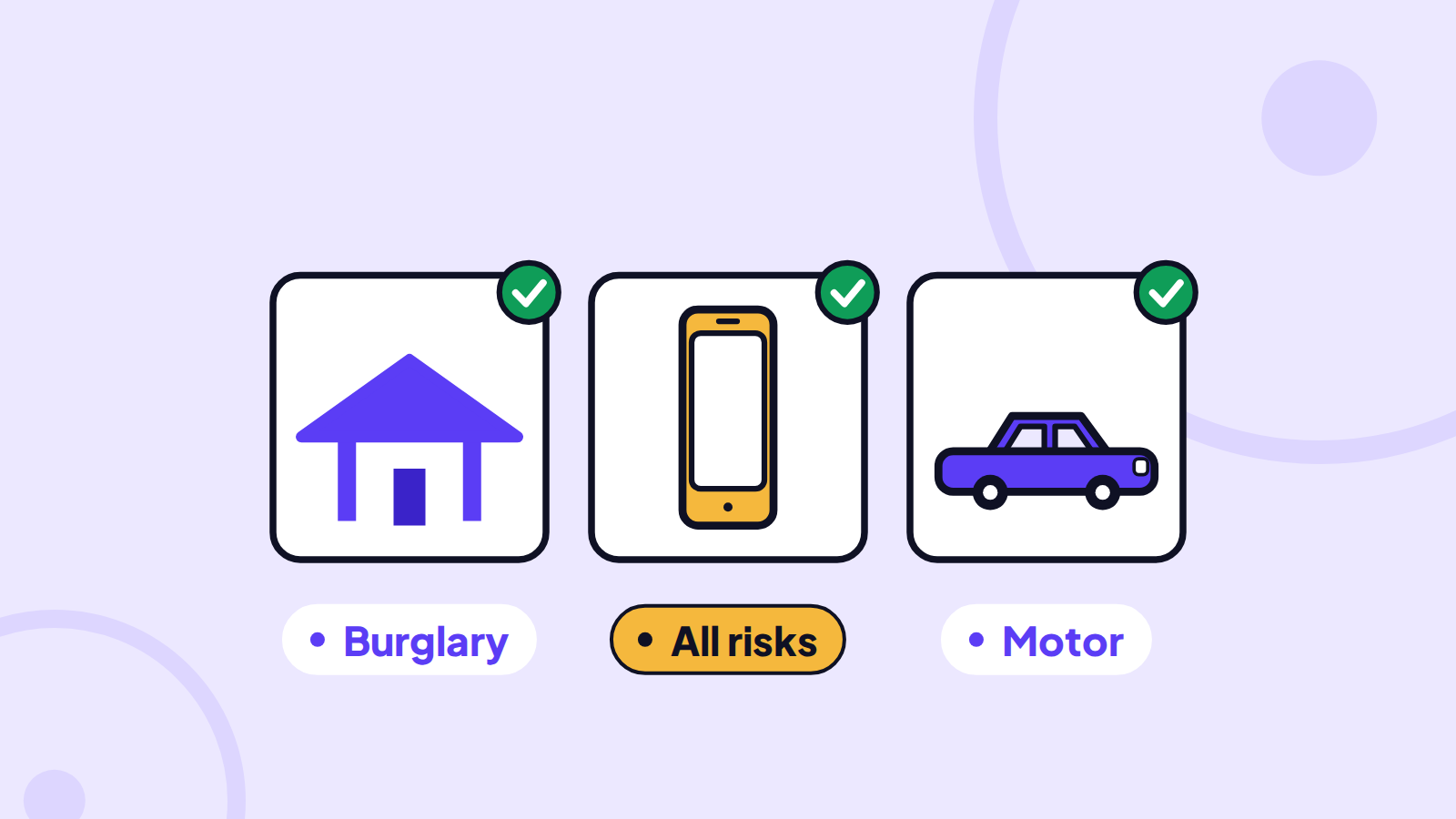
Replacement Value vs Market Value: What Your Insurance Pays
Replacement value is the cost of a new equivalent today; market value is what your used item would sell for. Which one your policy pays on, with naira examples and how to set a sum insured.
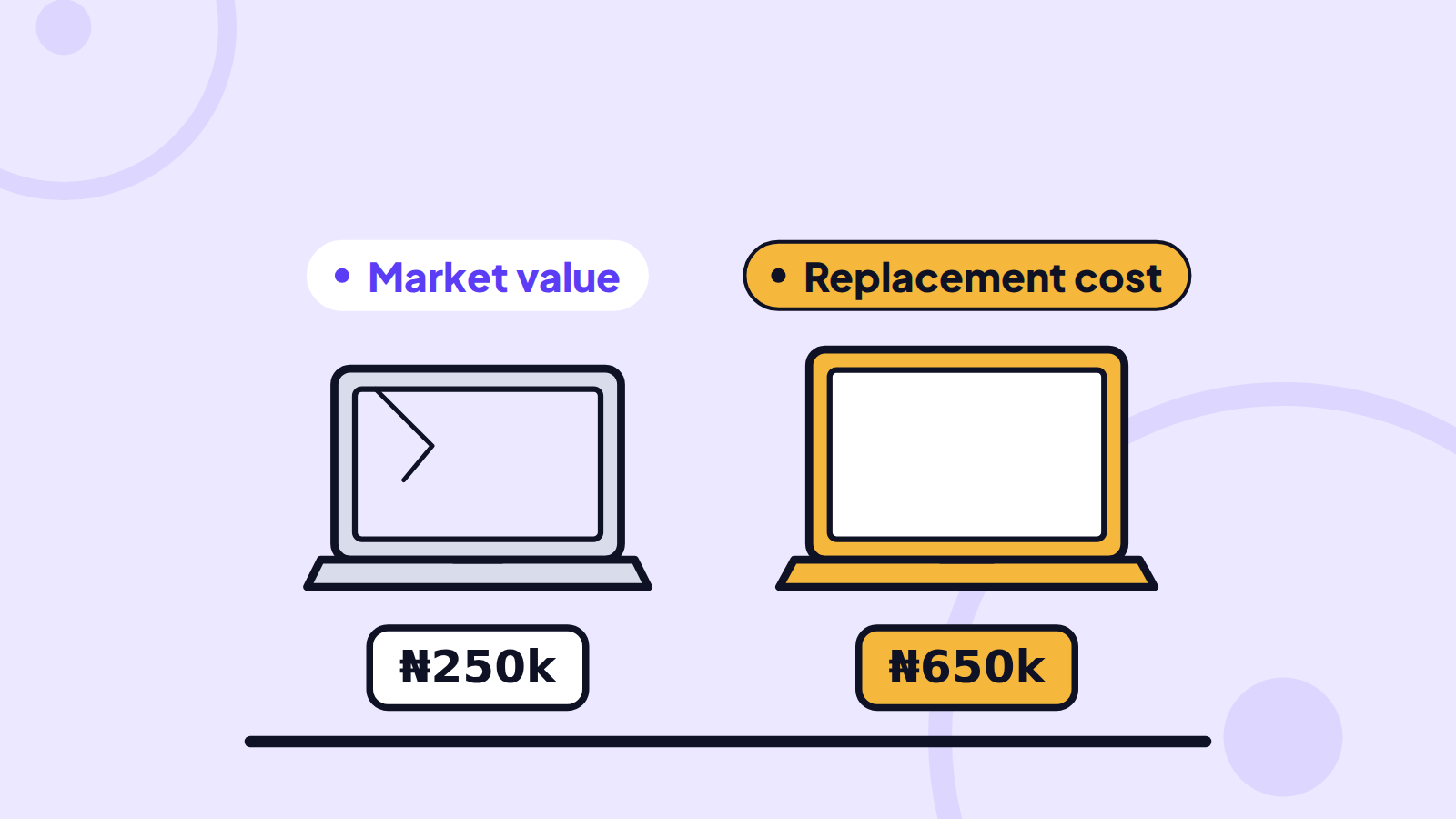
Replacement value is what it costs to buy the same item new today; market value is what your used item would sell for now, after age and wear. Most contents and all risks policies expect you to insure on replacement value, while motor cover usually pays market value. Insuring on the wrong one leaves you short at claim time.
Key takeaways
- Replacement value (new for old) is the price of a new equivalent today, not what you paid.
- Market value, also called actual cash value, is replacement value less depreciation.
- Buildings are insured on reinstatement value, the cost to rebuild, not the price the house would sell for.
- On an indemnity basis, the underwriter can deduct wear and tear or betterment from a claim.
- Set the sum insured on the basis your policy pays on, and update it as prices rise.
What do replacement value, market value and indemnity mean?
Four terms come up again and again.
- Replacement value is the cost of replacing an item with a new one of the same kind and quality today. It is often called new for old. A three-year-old 55-inch television is replaced with a new 55-inch television of similar specification.
- Market value is what your item would fetch if you sold it now, given its age and condition. Insurers sometimes call it actual cash value: roughly replacement value minus depreciation.
- Indemnity is the principle that a claim puts you back where you were before the loss, not better off. A policy paying on an indemnity basis pays the value of what you lost, which for a used item is closer to market value.
- Reinstatement value applies to buildings. It is the cost of rebuilding to the same standard, usually including clearing debris and professional fees, but not the land.
The gap between these figures can be large. A used generator might sell for half what a new one costs, and a house in a sought-after area may sell for far more, or less, than it costs to rebuild.
Which value does your policy pay on?
The basis of settlement is the rule in your wording that says how a claim is valued. Your own wording governs, but the usual position is:
- All risks for electronics, jewellery and equipment: usually replacement value, and a usual condition is that you insure the item for its replacement value.
- Household contents under a householder's policy: often new for old for most items, though some wordings deduct for wear and tear on clothing and linen.
- Buildings: reinstatement value, the rebuilding cost.
- Motor: usually the vehicle's market value at the time of the loss.
- Business stock: usually the cost of replacing it, what you paid the supplier, not the price you sell it at.
This matters because the sum insured, the amount you insure something for, is compared with the value on that basis. Insure a contents policy on market value when it settles on replacement value and you are underinsured.
What are betterment and wear and tear deductions?
Wear and tear is the loss of value that comes from age and use. On an indemnity basis, the underwriter can deduct it from a claim to reflect that your item was not new.
Betterment is the improvement you would gain if an old item were replaced or repaired with something newer or better. Where the policy is on an indemnity basis, the underwriter may ask you to pay that difference, for example when an old roof is rebuilt with new materials.
A worked example. Amaka bought a 55-inch television three years ago for ₦600,000. The same size and specification costs ₦900,000 today. It is stolen in a burglary.
- New for old: the claim is valued at ₦900,000, less the excess.
- Indemnity with wear and tear, at an illustrative 15% a year: 3 × 15% = 45% off, so ₦900,000 × 55% = ₦495,000, less the excess.
The same loss pays ₦405,000 less on an indemnity basis. Neither is wrong, but you need to know which you bought.
How do rising prices change the numbers?
When the naira weakens, the cost of imported goods climbs, and so does replacement value. People often keep the figure they paid, or reason that their item is "worth less now". Both leave them underinsured.
A worked example. Musa bought a generator three years ago for ₦1,000,000 and still insures it for ₦1,000,000. Second-hand, it might sell for ₦700,000, but the same model now costs ₦1,800,000 new. His equipment policy settles on replacement value.
A power surge damages the alternator and the repair costs ₦600,000. The average clause applies: if you insure for less than full value, the underwriter pays only the same share of any loss.
- Share insured: ₦1,000,000 ÷ ₦1,800,000 = 55.6%
- Claim paid: ₦600,000 × 55.6% = ₦333,333, before the excess.
If the generator were stolen outright, the most he could receive is the ₦1,000,000 sum insured, not the ₦1,800,000 he needs.
What would full cover cost? For illustration, at an equipment all risks rate of 3% a year, ₦1,000,000 costs ₦30,000 and ₦1,800,000 costs ₦54,000. The extra ₦24,000 a year would have added ₦266,667 to this one claim. Cova quotes your exact figure before you pay. See how to insure your generator and the average clause explained.
How should you set a sum insured?
Work out the value on the same basis your policy pays on.
- Price a new equivalent today. Check current prices from local sellers for the same model or the nearest current one, not the receipt from three years ago.
- Add the costs of replacing it. Delivery, installation and any duty all count, especially for generators, inverters and air conditioners.
- For buildings, get a rebuilding cost. Ask a builder or quantity surveyor what it would cost to rebuild, and keep the land price out of it. Our guide to buildings vs contents insurance explains what each part covers.
- List everything. Totals for contents are often far higher than people guess. A room-by-room household inventory checklist helps.
- Review regularly. Check values at every renewal and whenever prices jump.
VaultLog keeps each asset's value with its photos and receipts, and valuation reminders on every plan flag a figure that has gone stale. On Pro and above, value tracking shows how items change in value over time.
Is it ever right to insure for market value?
Yes, when that is the basis your policy settles on. Motor is the clearest case: a car is usually insured and paid at its current market value. Some indemnity wordings for older equipment work the same way.
What goes wrong is mixing bases: using a market value figure on a policy that pays new for old. That triggers the average clause on every partial loss. If you are unsure which basis applies, ask before you buy, and match the sum insured to it.
Frequently asked questions
Is replacement value the same as new for old?
Yes, in everyday use the two mean the same thing: the claim is valued at the cost of a new equivalent item today. Your wording may still set conditions, such as replacing the item before the full amount is paid.
What is actual cash value in insurance?
Actual cash value is replacement value minus depreciation for age and wear. It is close to what the item would sell for second-hand, and it is the usual basis for indemnity settlements.
Should I insure my house for its market value?
No. Buildings cover is based on reinstatement value, the cost to rebuild, which leaves out the land. A house can sell for far more than it costs to rebuild, or for less, so the sale price is the wrong guide.
Why did my insurer deduct wear and tear from my claim?
Your policy was probably on an indemnity basis, which pays what the item was worth at the time of the loss rather than the cost of a new one. Check the basis of settlement in your wording, and ask whether a new-for-old option is available at renewal.
How often should I update my sums insured?
At least once a year at renewal, and sooner when prices move quickly or you buy something significant. With a weaker naira, imported goods can rise in price within months.
Start a free vault on VaultCova, log what you own at today's replacement values, and ask Cova to check your sums insured.